


Dylan Hickes

Dylan Hickes

About Dylan
Expert Analysis
Amal Scott | Prep Redzone Scout

Dylan Hickes
 Dylan
Hickes
6'3" | 260 lbs | DL
Taft School | 2028
State
New E
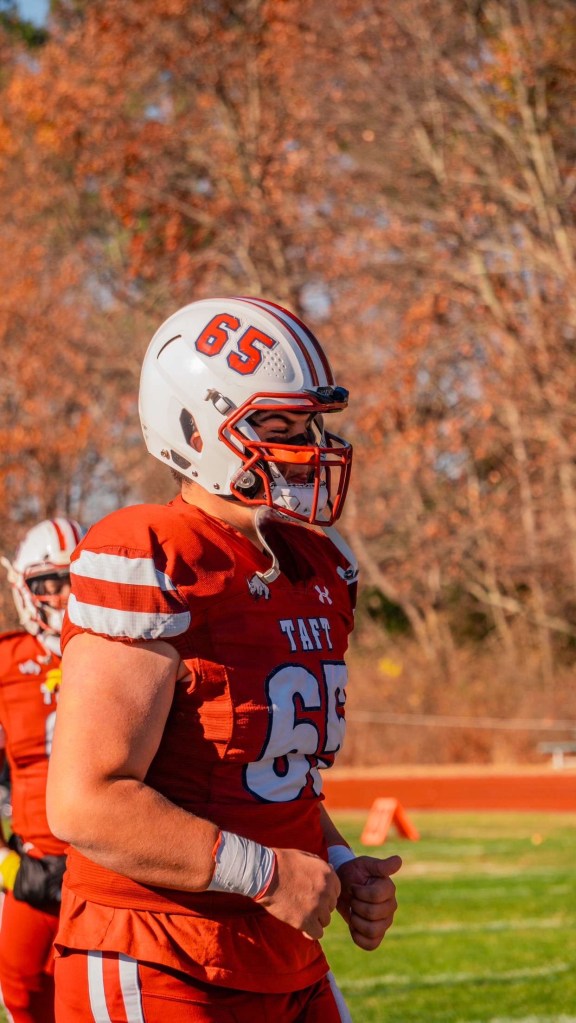
is a physically dominant defensive line prospect who relocated from Canada to join one of New England’s premier prep programs at Taft School. The move instantly boosts his visibility to NCAA coaches while placing him in a highly competitive environment that will accelerate his technical and schematic growth. Hickes arrives with rare measurables and burst for a 2028 prospect, already flashing the traits that make him a high-upside addition to any college defensive front. At 6’3” and 250 pounds, Hickes possesses the length, mass, and leverage to play multiple techniques (3-tech, 5-tech, or stand-up edge) at the next level. He is already built like a college-ready defensive end or interior disruptor. Hickes is very strong at the point of attack. He can anchor against double teams, shed blockers with power, and collapse the pocket or run lanes when engaged. His get-off is a legitimate separator. Hickes fires out low and fast, routinely winning the initial phase of the rep before the offensive lineman can set his base. He consistently gets into the backfield quickly. That combination of burst, strength, and pursuit allows him to generate negative plays in the run game and pressure the quarterback on passing downs.
Dylan
Hickes
6'3" | 260 lbs | DL
Taft School | 2028
State
New E
is a physically dominant defensive line prospect who relocated from Canada to join one of New England’s premier prep programs at Taft School. The move instantly boosts his visibility to NCAA coaches while placing him in a highly competitive environment that will accelerate his technical and schematic growth. Hickes arrives with rare measurables and burst for a 2028 prospect, already flashing the traits that make him a high-upside addition to any college defensive front. At 6’3” and 250 pounds, Hickes possesses the length, mass, and leverage to play multiple techniques (3-tech, 5-tech, or stand-up edge) at the next level. He is already built like a college-ready defensive end or interior disruptor. Hickes is very strong at the point of attack. He can anchor against double teams, shed blockers with power, and collapse the pocket or run lanes when engaged. His get-off is a legitimate separator. Hickes fires out low and fast, routinely winning the initial phase of the rep before the offensive lineman can set his base. He consistently gets into the backfield quickly. That combination of burst, strength, and pursuit allows him to generate negative plays in the run game and pressure the quarterback on passing downs.
Hickes relies heavily on his initial quickness and raw power but must develop more consistent, violent hand placement. Refining rip, swipe, and club moves will help him maintain separation, convert speed to power, and finish rushes instead of getting washed or stalemated once the initial advantage is countered. As a recent transfer from the Canadian system, Hickes is still learning U.S. high-school tempo, pre-snap reads, and defensive line nuances (stunts, twists, gap responsibilities). Improved diagnostic ability and overall football intelligence will allow him to play faster and diagnose plays before the snap rather than reacting after contact. Hickes is exactly the type of developmental prospect college coaches love to find in the 2028 cycle — a big, strong, explosive athlete who already shows he can win with first-step quickness and penetrate the backfield. His size and power give him the foundation to hold up against Power 4 offensive lines, while the burst suggests he can become a legitimate pass-rush threat once his hand technique catches up. The move to Taft is a perfect next step. The program’s strength and conditioning, film study, and high-level competition will directly address his two primary areas of growth. Once Hickes sharpens his hand usage and deepens his football IQ, his physical tools should translate cleanly to the college game.
Access all of Prep Redzone
Subscribe to read about this player
Read EvaluationPlayer Claimed


Season Stats
Cumulative totals auto-calculated from your game entries below.
Game Stats
Individual game performance for the 2026-27 season.
Related Players
View other players from the same high school.